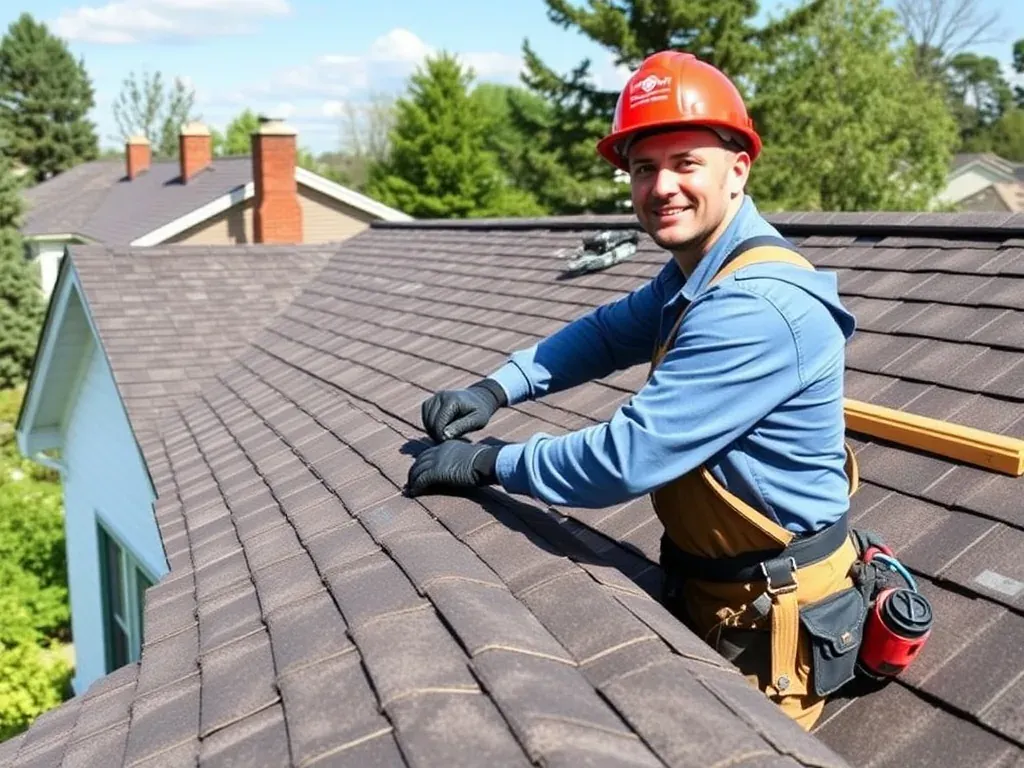
Emergency roof repair stops active water intrusion the same day, before it reaches your ceiling, your insulation, or the wiring behind it. A fast summer thunderstorm can lift shingle tabs along the eave and drive rain past tired flashing in a matter of hours.
What we do first is mitigate. We spread emergency tarps over the breach, pull debris out of the valleys and from behind the chimney, and confirm the gutters and downspouts can move water away from the fascia instead of backing up under the drip edge.
Then we return with the permanent fix: new underlayment, replacement shingles matched to the existing field course, and sealant worked into every penetration. That layering is what holds through an ice dam in February and a humid 90-degree July in Trenton.
- Ceiling stains that grow after every rain mean water is already past the underlayment and soaking the sheathing above.
- Missing or bruised shingles after a storm leave the felt and synthetic underlayment exposed to the next round of wind.
- Granule loss, the sandy grit collecting in the gutter, is one of the clearest signs of end-of-life wear on an asphalt shingle.
- Curling, buckling, or split tabs let wind-driven rain wick sideways under the course above instead of running off.
- Rust or separation at the drip edge means the metal edge has stopped shedding water clear of the eave.
- Staining in the soffit, or paint peeling off the fascia, points to a clogged gutter or a failed ice-and-water shield.
- A cracked pipe boot or a chimney flashing leak usually shows up as a stain on the ceiling directly below the stack.
- Ice dams along the eave push meltwater back under the shingle edges and into the wall cavity.
A same-day call-out follows the same order every time, because a wet roof gets worse while you are deciding. Here is what an emergency response looks like from the truck arriving to the roof being dry.
- We tarp the opening with weighted, self-adhered material that holds through gusts, then seal it tight against the deck.
- We clear debris from the rooftop and the valleys, and stage a dumpster so the tear-off leaves in one trip.
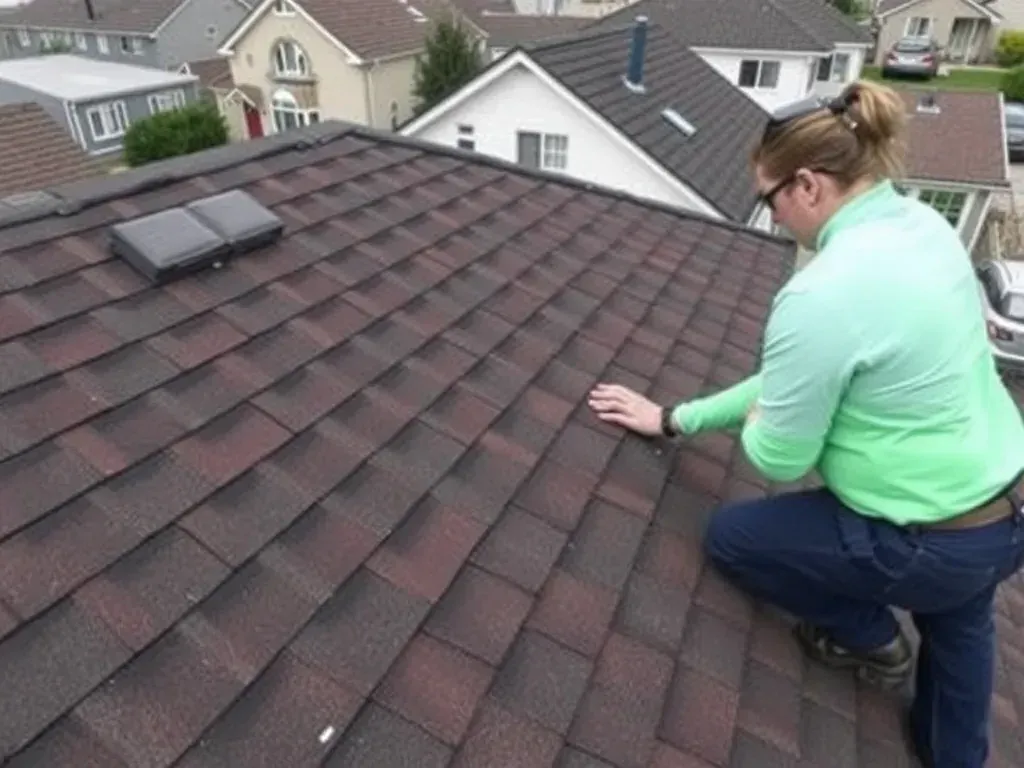
- We run a roof inspection of the deck, the flashing condition, and the attic side for moisture content.
- We re-secure step flashing, counter-flashing, and apron flashing where wind has worked the metal loose.
- We replace softened substrate with plywood or OSB, fastened with ring-shank nails or screws into sound rafters.
- We photograph and measure everything for your insurance claim before any permanent work starts.
- We check the repair against building code rules for ventilation, drip edge, and fastening before we close it up.
Which material we use depends on what is already on the roof and how steep the pitch is. On a West Ward rowhome built in the 1800s, matching a wood shake or slate profile matters more than saving a few dollars on shingle. On a mid-century bungalow near the Delaware River, a straight architectural shingle repair blends in.
- Architectural shingle is the standard choice: heavier than three-tab shingle, better against wind uplift, and it matches most Trenton roofs.
- Standing-seam metal panel handles snow shedding well, though a corrugated panel needs different fasteners and more care at the fastener line.
- TPO, EPDM, or PVC membrane covers flat and low-slope sections where a shingle would pond water.
- Modified bitumen, torched down over a bitumen base sheet, suits porch roofs and mansard sections.
- Ice-and-water shield along the eave and in the valley is what actually stops ice dam damage, not the shingle on top of it.
- Ridge vent and soffit vent work together to keep the attic from cooking in July and condensing in January.
- Tar paper has given way to synthetic underlayment on most of our repairs, because it does not tear at the eave.
- Sealant and caulk are touch-up materials, never the fix; a bead of roof cement over a split is a season, not a repair.
Every crew works off ladder and scaffold with a safety harness tied off, and we check pitch with a roofing square before quoting. A nail gun and air compressor speed the field course and starter course. A pry bar and roofing shovel do the careful work at the verge and overhang.
Whatever the frame is, truss or stick-built rafter and joist, we look at the ridge beam, purlin, and roof deck before anything new goes over it. On metal systems that means checking batten and counterbatten spacing and the condition of the substrate underneath.
Details get more attention than most people expect. A dormer, skylight, parapet, or canopy each brings its own flashing and waterproofing problem, and so does a chimney or vent boot. We hand-seal what needs it, replace counter-flashing where it has corroded, and check that the coping and scupper on a flat roof still drain.
Small hardware decides whether the repair lasts. A short fastener or an overdriven screw can leave a gap you will not see until the next storm, so we set snow guard anchors and pipe flashing boots with the same care as the field shingles.